
In this article
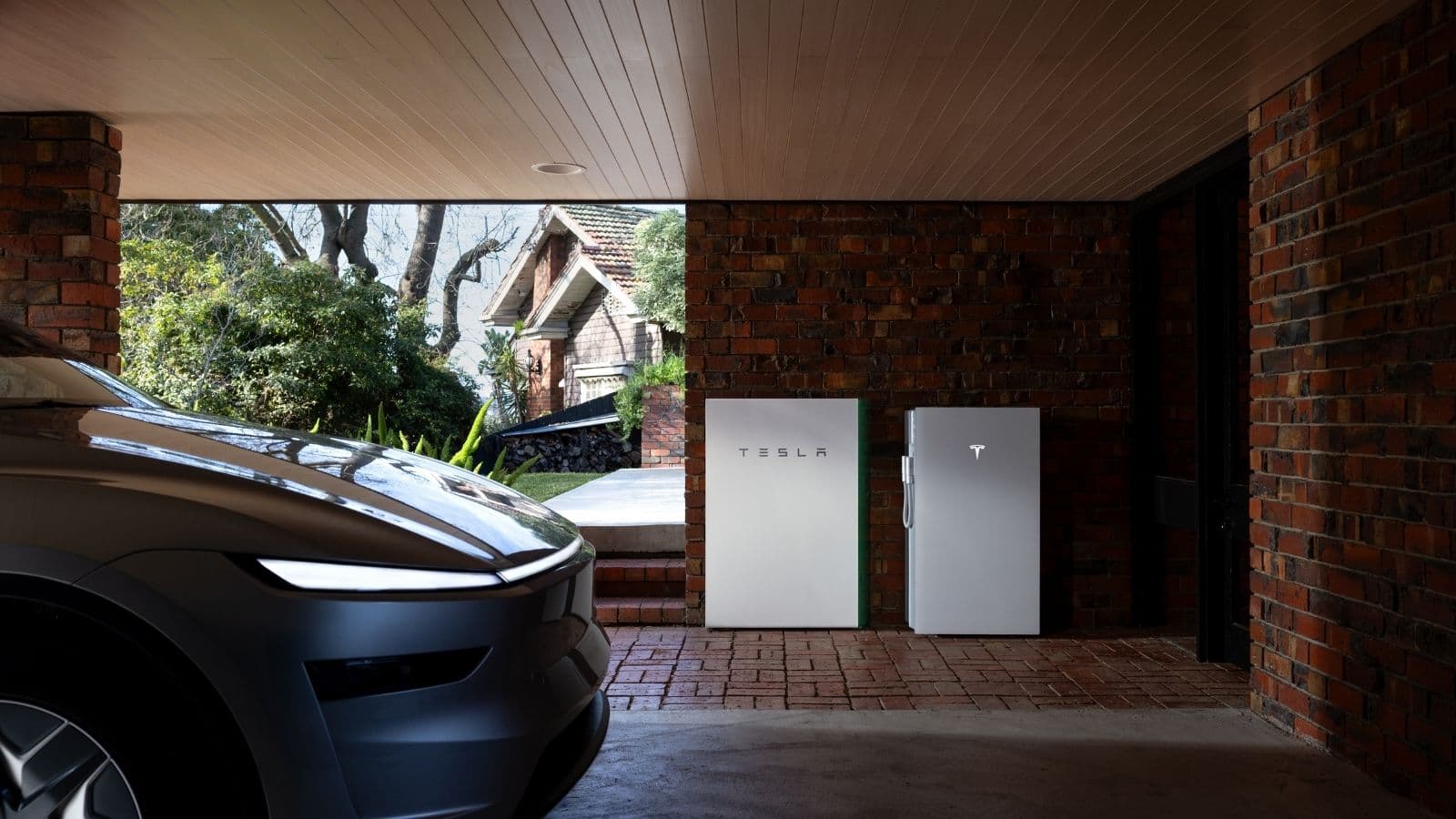
If you have a Powerwall 2 sitting on the side of your house and you have wanted more storage, you no longer have to choose between a second-hand Powerwall 2 and starting over.
Tesla has made Powerwall 2 and Powerwall 3 run on the same site. It happens through firmware 26.26, not a hardware retrofit, and Tesla confirmed to us in the first week of August that it is fully available rather than still in pilot. A site can run up to four Powerwall 2 units alongside one Powerwall 3 and three Powerwall 3 Expansion units.
Your existing Powerwall 2 stays. That is the whole point of it.
Powerwall 2 approval status
This one causes more worry than it should, so let's clear it early.
Powerwall 2 came off the Clean Energy Council approved product list when its listing expired in August 2025, and Tesla is not re-certifying it. The reason is AS/NZS 4777.2:2020 Amendment 2:2024, which took effect on 23 August 2025. Any inverter without a manufacturer declaration came off the list that day.
None of that makes your installed Powerwall 2 non-compliant. It was approved when it went in and it stays approved. The listing matters for equipment being installed new, so the Powerwall 3 and any Expansion units you add need current certification. The unit already bolted to your wall does not.
If someone has told you that you need to replace a working Powerwall 2 because it is "no longer approved", get a second opinion.
The 30kVA aggregate inverter limit
Here is the WA-specific bit that gets missed, and the reason two identical houses can get two different answers.
Since 1 May 2026, Western Power caps the aggregate inverter capacity on a site at 30kVA. Aggregate means everything: your solar inverter and your battery inverters, added together. Single phase or three phase, the ceiling is the same.
A Powerwall 3 is not a battery you hang off an existing inverter. It has its own inverter built in. So adding one does not just add storage, it adds inverter capacity to a site that already has a solar inverter and a Powerwall 2 on it.
Most Perth homes have headroom. A 6.6kW array on a 5kW inverter plus a Powerwall 2 leaves plenty of room under 30kVA. But if you have already been through one expansion, or you are on a larger three-phase system with a big array, the sum is worth doing before anyone gets excited. We would rather tell you the number does not work in a ten-minute phone call than find it at the connection application.
Two other constraints to check on your specific install: the original Gateway 1 and Neurio metering are not supported, and on three phase the Powerwall 2 output is limited to 5kW. Neither is a dealbreaker on its own. Both change what the finished system does.


Confirm rebate eligibility in writing
Adding a battery to a home that already has one is not the same transaction as a first-time install, and the rebate eligibility does not automatically follow.
The WA Residential Battery Scheme pays Synergy customers $130 per usable kWh, capped at $1,300, and requires VPP participation. The federal Cheaper Home Batteries Program runs through the STC mechanism at 6.8 STCs per kWh for May to December 2026, worth roughly $252 per kWh on the first 14kWh. Those are the current figures for a standard install.
Whether an expansion onto an existing battery site qualifies for either is a question we put to the scheme rather than answer from the showroom floor, because the fine print on both was adjusted in May 2026 and eligibility is exactly the kind of detail that moves.
Assessing the need for more storage
If your Powerwall 2 is regularly hitting empty before morning, more storage will change your bills. Ducted aircon running past sunset, a pool pump, an EV charging overnight, a household that is home in the evening: that is the profile where a second battery earns out.
If your Powerwall 2 still has charge in it at 6am most days, adding capacity will not save you much. You are not short of storage, and a bigger battery does not create solar you did not generate. Put the money somewhere else.
The upgrade also changes what happens in a blackout, and for a lot of Perth households that is worth more than the bill maths. A January storm that takes the street down for six hours is a different experience with more stored capacity behind the Gateway.
Checking your existing system
Tesla has asked us to get in touch with every Powerwall 2 owner on our books about this, and they are seeing good conversion numbers nationally. We would rather do it the other way around: tell you the constraint list first, and let the ones where it stacks up come to us.
We installed a lot of these. If yours went in through us, we already have the site details, the inverter sizes and the Gateway generation on file, which means the 30kVA sum and the compatibility check take one call rather than a site visit.
Get a quote and mention you have a Powerwall 2. We will run the numbers before we run the sales pitch.
Sources
- Tesla Channel Partners AU/NZ notice, Backwards Compatibility Is Now Available, 28 July 2026
- Tesla application note, Installing Powerwall 3 in an Existing Powerwall 2 System v1.0, Tesla Partner Portal
- Tesla account management correspondence to PSW, 3 August 2026, confirming general availability on firmware 26.26
- Clean Energy Council, inverter standards change: AS/NZS 4777.2:2020 Amd 2:2024, effective 23 August 2025
- Western Power / SWIS connection parameters current from 1 May 2026
- WA Residential Battery Scheme and federal Cheaper Home Batteries Program figures, verified 30 June 2026