

In this article +
For about seven homes in ten, the advertised price is the price. This page is the other three: every extra we charge, what it costs, and why — published before you ask for a quote rather than produced afterwards as a variation.
Most of these come down to three things. Your roof is tile rather than tin, your house has more than one storey, or your switchboard has no room left. None of them is a surprise to an electrician who has seen the photos, which is why we ask for photos before quoting.
Before you request a quote: This guide lists additional installation costs for PSW Energy and Perth Solar Warehouse (PSW) packages where the work exceeds the base advertised scope.
Base-package prices follow PSW Energy and Perth Solar Warehouse's 'singles rule': single-level, single-roof dwellings.
Additional charges cover the labour and materials needed for your property's installation and safety requirements.
Below is the PSW Additional Solar Installation Cost Guide, designed to make additional installation costs as transparent as possible. The prices listed are organised by the most common upgrade costs and are current as of up to 30 days prior to the publication date.
IMPORTANT:
SOLAR.
1.1
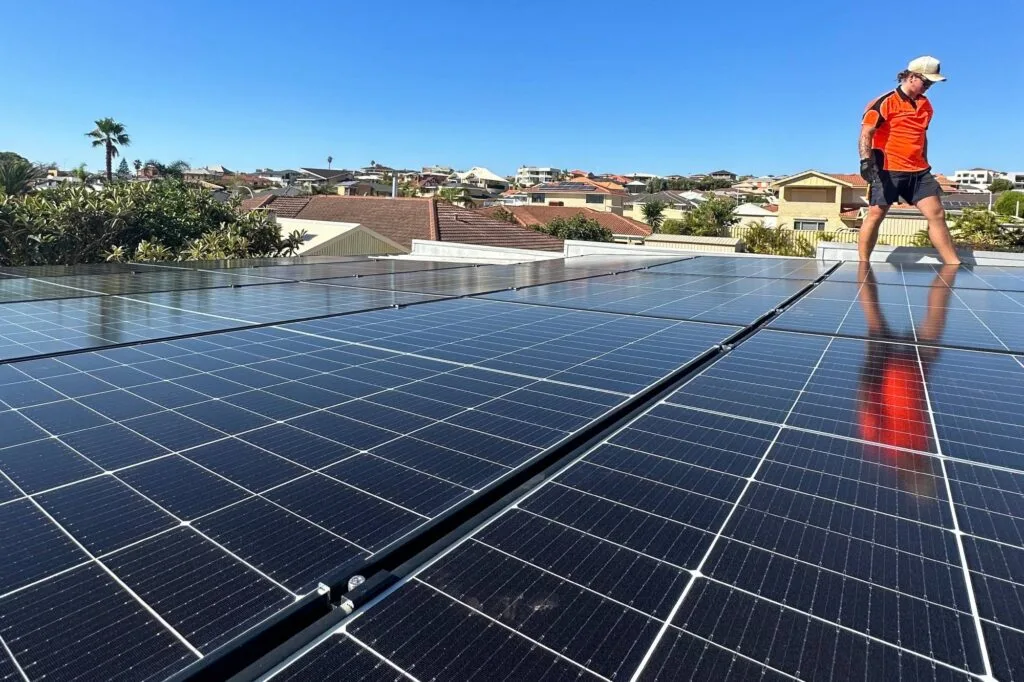
Tiled roof upgrade: from $110
A base-advertised PSW solar package includes mounting hardware for tin roofs. Tile roofs need more expensive stainless steel brackets shaped to preserve the roof's waterproofing, and these take longer to install. Standard tile brackets may not fit every tile profile.
| System size | Base additional cost |
|---|---|
|
3.7 kW |
$110 |
|
6.6 kW |
$220 |
|
10 kW |
$330 |
|
13 kW |
$440 |
|
19 kW |
$660 |
The above pricing table should be used as a general guide. Certain tile profiles may affect the cost.
1.2
Multi-level installation (solar): from $550
Since multi-level homes and properties vary in shape and form, the additional cost of $550 is a preliminary estimate only. Each property must be assessed and quoted individually, as the extra cost may be necessary depending on the specific level of installation difficulty.
Frequent questions:
Additional installation costs exist for multiple level installations or properties where the gutter line is higher than 2.2m, for varied reasons:
- Time.
- Employee safety – Worksafe laws.
- Additional cabling requirements.
- Safety barriers.
- Lifting equipment.
Even if a solar array is being installed on a single-level roof of the house, multi-level installation costs are required. As the electric cabling work is often the most exhaustive portion of any installation, this additional cost recovers the extra time and materials required to extend cabling through the multi-level section of the home.
1.3
Split solar array: from $220
Base pricing covers panels on one roof face. Splitting the array across several faces to reach the required capacity adds cabling and labour.
Frequent questions:
Additional installation costs exist for multiple level installations or properties where the gutter line is higher than 2.2m, for varied reasons:
- Time.
- Employee safety – Worksafe laws.
- Additional cabling requirements.
- Safety barriers.
- Lifting equipment.
Even if a solar array is being installed on a single-level roof of the house, multi-level installation costs are required. As the electric cabling work is often the most exhaustive portion of any installation, this additional cost recovers the extra time and materials required to extend cabling through the multi-level section of the home.
This scenario will require a split solar array charge as the additional material and labour costs are incurred through having to re-enter the roof space, create additional penetrations in an alternative section of roof and install a supplementary solar array irrelevant of distance.
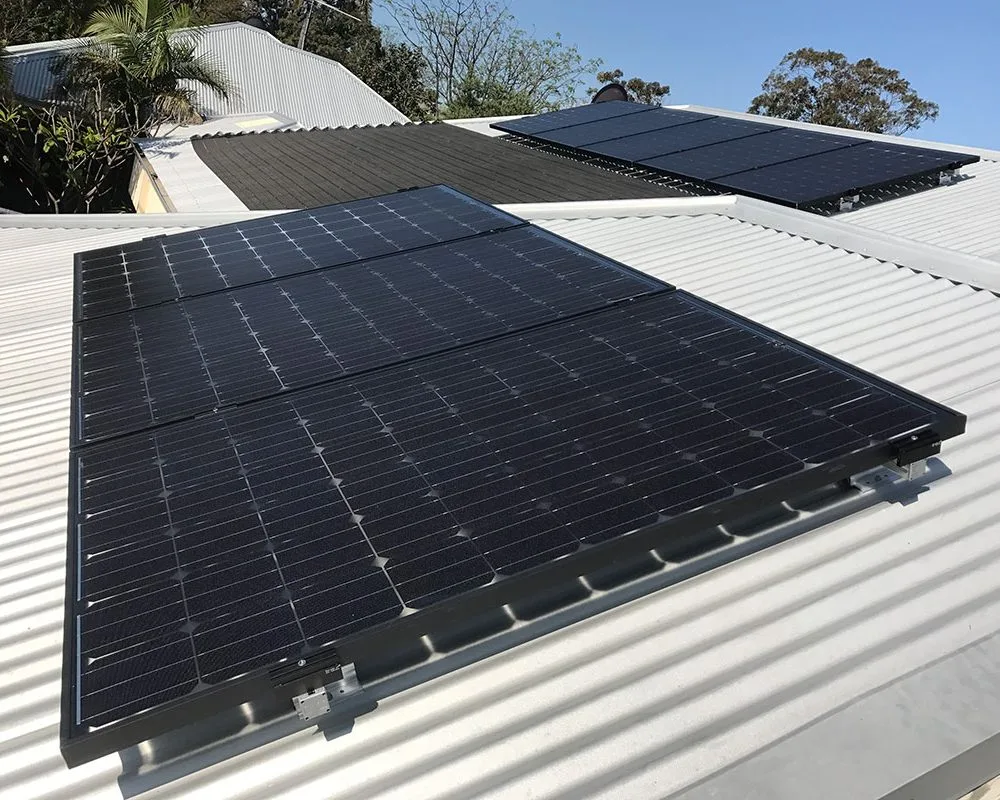
1.3 Example: A ‘split’ solar array facing the same orientation.
1.4
Existing system removal: from $30 per panel
It is widely recognised that “reusing is better than recycling.” When an existing solar energy system is removed, it is important to repurpose the products in an environmentally sustainable way for the benefit of all. PSW takes a responsible approach by ensuring that your old solar energy system can be repurposed in various regions around the world, including certain less energy-rich nations where renewable energy subsidies are obsolete.
This initiative helps provide essential services, such as clean drinking water, which can be powered by solar energy. The cost of ensuring that your solar panels are not sent to landfills and are sustainably repurposed is relatively low. In most cases, it only costs $30 per panel, which covers the labour/time for removal and transport.
1.5
Switchboard upgrade: Assess
A variable cost is associated with switchboard upgrades, which depend on the extent of the work needed. Approximately 70% of switchboards have enough available space to accommodate a solar and battery system. However, if your switchboard is at full capacity or must be modified to meet code requirements, upgrade work may be necessary. The average costs for common switchboard upgrade work are as follows:
| Required upgrade | Average Cost |
|---|---|
|
RCBO conversion |
from $165 per circuit |
|
1-phase residential switchboard upgrade (16 pole) |
from $1990 |
|
3-phase residential switchboard upgrade (24 pole) |
from $2490 |
The table above provides a general guideline. Costs for switchboard upgrades will be evaluated and quoted on an individual basis. Submitting a photo can help sales support determine if a switchboard upgrade is required.
1.6
DC Couple an existing solar array: from $1000
If you already have a solar panel system installed on your roof, DC coupling allows us to integrate a new battery storage system directly with your existing array at the DC (direct current) level, before the power is converted to AC for your home. This approach is highly efficient because it reduces conversion losses, meaning more of the energy your panels generate goes straight into your battery. The “from $1,000” starting price covers the additional configuration work and support liability needed to connect your current solar setup to a compatible battery system via a DC-coupled connection.
To qualify, your existing solar array must be in good working order and compatible with the battery or inverter being installed. Typically, this means panels with suitable voltages and string configurations that fall within the new inverter’s MPPT input range. A site assessment is required to confirm panel condition, wiring, roof layout, and switchboard compatibility. In some cases, minor electrical upgrades or panel reconfiguration may be needed, which can affect the final cost. This option is ideal for homeowners who want to add battery storage without replacing their existing panels, maximising the return on their original solar investment.
BATTERY.
2.1
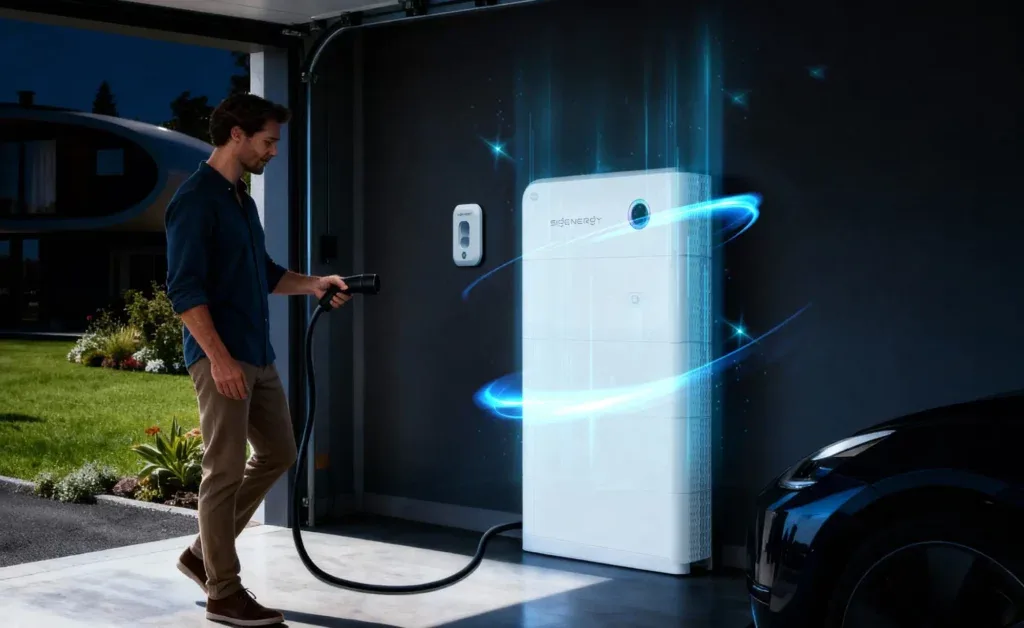
Blackout protection: Assess
The affordability of batteries has improved as their primary purpose has changed. Many modern solar batteries are primarily used to provide continuous energy savings from solar-generated power in low- to no-light conditions.
If you live in an area that frequently experiences power outages, a solar and battery system can serve as a temporary backup power supply for your entire home or selected loads, depending on your equipment choice. However, adding a backup power function requires extra equipment and wiring to ensure that the backup supply meets your expectations and poses no safety risks for those working on the grid. This added complexity can lead to increased costs for both hardware and installation time.
| System | Base Additional Cost |
|---|---|
|
Alpha ESS SMILE5 (essential circuit) |
$1100 |
|
Fronius Primo GEN24 (essential circuit) |
$2200 |
|
Fronius Symo GEN24 (essential circuit) |
$2200 |
|
Fronius Primo or Symo GEN24 (PV point) |
$550 |
|
Goodwe EH (essential circuit) |
$1100 |
|
Goodwe ET (essential circuit) |
$1500 |
|
iStore gateway, 1-phase (current limited) |
$1650 |
|
iStore gateway, 3-phase (current limited) |
$2200 |
|
Sungrow RS (essential circuit) |
$1100 |
|
Sungrow RT (essential circuit) |
$2200 |
|
Tesla Powerwall, single phase (whole home) |
$0 (included) |
|
Tesla Powerwall, single phase (essential circuit) |
$550 |
|
Tesla Powerwall, three phase (essential circuit) |
$550 |
The above table is a guide only. Backup power supply costs are to be assessed/quoted on a case-by-case basis.
Important: The back up power features for the above products are limited and will not provide off-grid power for extended periods. If you required stable emergency power in the event of a grid outage for an extended period, consult with sales support.
2.2
Alternative Gateway location: Assess
Gateway definition: An alternative housing for blackout protection and/or battery system communications.
Backup wiring intercepts the supply at the switchboard's entry point. Locating the gateway elsewhere adds cabling and installation time.
PSW‘s advertised prices cover 70% of installation scenarios, which include gateway mounting locations within 3 meters of the nominated switchboard, provided they are located under the same roof and on the same level. If you plan to use an alternative gateway location, a baseline charge of $80 per meter applies for additional cabling requirements. All alternative gateway locations will require an ‘assessment’ of the battery features. Customers should communicate this intention during the battery quoting phase.
This additional cost also applies to ‘whole-home’ blackout protection options integrated within selected all-in-one energy storage systems.
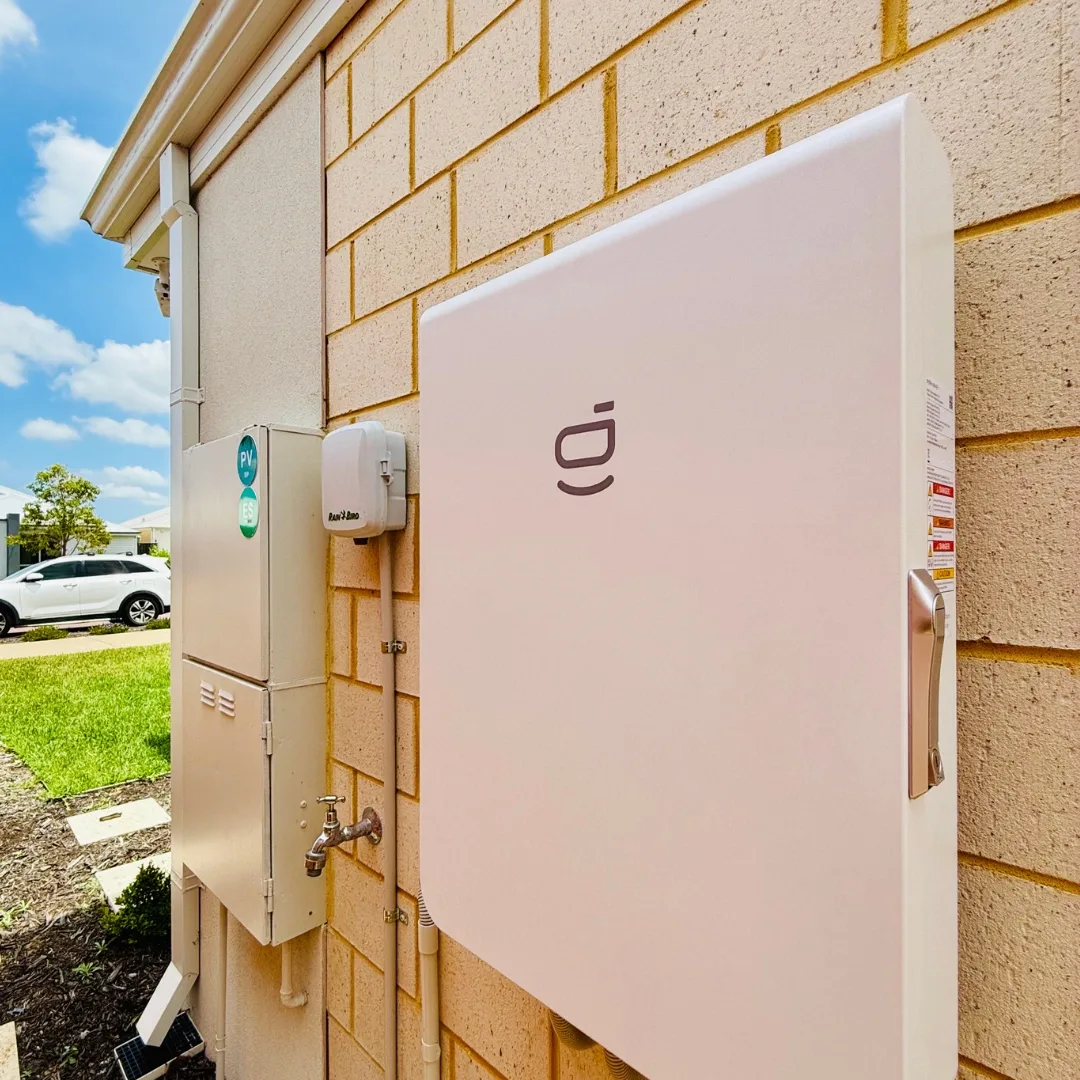
2.2 Example: A Sigenergy Gateway installed within 3m (cable length) of the nominated switchboard.
2.3
Hybrid inverter activation fees: from $715
Certain inverter brands have addressed the initial affordability issue by offering ‘hybrid-ready’ or ‘non-activated’ inverters. These options enable customers to invest in solar energy with hybrid inverter flexibility at a lower upfront cost, while also preserving energy storage benefits.
Hybrid-ready and non-activated solar inverters are designed with software locks on their battery DC terminals. When customers decide to add batteries, they can unlock the full features of the inverter with an activation code. This code, provided by the battery installer, is essential for installation when upgrading a battery with one of these inverters.
| Inverter make | Size | Battery input activation |
|---|---|---|
|
Goodwe EH+ |
5kW |
$715 |
|
Goodwe N-EH |
5 kW |
$715 |
|
Fronius Primo GEN24 |
5, 8, 10 kW |
$990 |
|
Fronius Symo GEN24 |
5, 8, 10 kW |
$990 |
Important: Activation fees form a component of the battery installation, if required. Further learning: The difference between a hybrid and a hybrid-ready inverter ›
2.4
Battery stacking kits: from $550
Adding battery units can require wiring harnesses, mounting hardware and extra installation time. The stacking-kit prices below cover those materials and labour per unit.
| Battery make | Accommodates | Cost |
|---|---|---|
|
Tesla Powerwall 3 |
1 expansion pack |
$550 |
2.5
Multi-level installation (battery): from $440
Multiple-level homes or properties come in various shapes and sizes, and the additional cost of $440 is a base guideline. Each property needs to be evaluated and site assessed, as the price may vary depending on the difficulty of the installation.
Frequent questions:
Additional installation costs exist for multiple level installations or properties where the gutter line is higher than 2.2m, for varied reasons:
- Time.
- Employee safety – Worksafe laws.
- Additional cabling requirements.
- Safety barriers.
- Lifting equipment.
This depends on the cable path or certain technician access requirements. Once access to an area of the dwelling is required to a roof region with a greater than a 2.2m gutter line, a mult-level installation cost is applicable.
EV CHARGING.
3.1
3-phase/ 22 kW charging: from $330
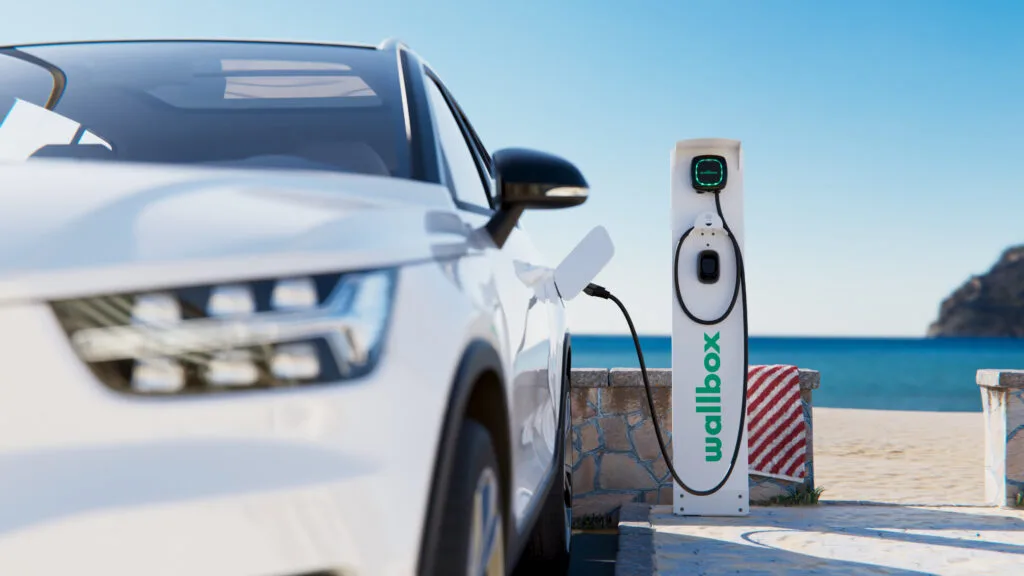
The advertised costs for electric vehicle (EV) charging outlets typically cover a single-phase supply to the outlet. Although certain EV chargers, such as the Tesla Wall Connector, can operate on either single-phase or three-phase power without requiring hardware upgrades, there are additional expenses to consider. These include time, cabling, and various components such as Residual Current Circuit Breaker with Overcurrent (RCBO) protection and isolators to accommodate three-phase power supplies.
If your property is equipped with a three-phase power supply, using a charger with 22 kW capabilities can significantly reduce the charging time for your electric vehicle. The cost for provisioning a three-phase outlet for your EV charger starts at $330 per outlet.
3.2
Multi-level installation (EV): from $440
Since multi-level homes or properties come in various shapes and sizes, an additional cost of $440 is merely a general estimate. Each property must be evaluated and quoted individually, as the increased cost may depend on different levels of installation difficulty.
Frequent questions:
Additional installation costs exist for multiple level installations or properties where the gutter line is higher than 2.2m, for varied reasons:
- Time.
- Employee safety – Worksafe laws.
- Additional cabling requirements.
- Safety barriers.
- Lifting equipment.
This depends on the cable path or certain technician access requirements. Once access to an area of the dwelling is required to a roof region with a greater than a 2.2m gutter line, a mult-level installation cost is applicable.
3.3
Solar optimisation: from $890
| Power Sensor | 1 phase | 3 phase |
|---|---|---|
|
Goodwe |
$890 |
$1090 |
|
Fox ESS |
$890 |
$1090 |
|
Sigenergy |
$890 |
$1090 |
|
Fronius |
$890 |
$1090 |
|
iStore |
$890 |
$1090 |
|
Tesla |
TPW2/3 Gateway |
TPW2/3 Gateway |
Modifications to access and the switchboard may impact the price guide.
Site-specific work.
PSW assesses the site-specific work below when preparing your quote, including what is needed to support the product throughout its intended lifespan.
| Scenario | Example | Cost |
|---|---|---|
|
Detached dwellings |
An installation to be spread across two separate buildings. |
Assess |
|
Underground works |
Installations where underground cabling is required. |
Assess |
|
Inadequate roof structures |
Where a roof may not be deemed adequate to support the solar array for the intended life. |
Assess |
|
Additional cabling requirements |
Where an installation requires additional cabling beyond 30m total of AC and DC combined. |
Assess |
|
Communication cabling |
Where communication cabling is required to be provisioned for network connection. |
Assess |
Disclaimer.
PSW Energy and Perth Solar Warehouse (PSW) staff reserve the right to respectfully decline to participate in selected tenders, quote requests, or inquiries at their discretion.