
In this article +
For decades, Australian homeowners treated electricity as a background utility: reliable enough, mostly affordable, and someone else’s problem when things went wrong. That mindset is rapidly disappearing. Rising retail prices, export restrictions, grid instability, and the accelerating electrification of homes have pushed energy from the margins into the centre of household decision-making.
Quick insight
- Rising electricity prices, falling feed-in tariffs, and grid constraints mean the most valuable solar systems will be designed to minimise reliance on the grid, not maximise exports or short-term savings.
- Solar, batteries, EV charging, and appliance control are converging into unified energy platforms. Homeowners who choose aligned, expandable ecosystems now will avoid costly upgrades and obsolescence later.
- Intelligent solar optimisation, using power in real time rather than exporting it, will rival batteries as a return-on-investment strategy, allowing smarter systems to outperform larger ones.
Solar is no longer a “nice-to-have” upgrade. It’s infrastructure.
As we look toward 2026, the question for homeowners isn’t whether solar and batteries will continue to improve — they will — but how those improvements will shape what becomes mainstream, expected, and ultimately obsolete. Which technologies are genuinely on track for widespread adoption, and which buying decisions made today will still feel smart in three years’ time?
Here are the five most likely, commercially grounded shifts set to define Australian residential solar and battery systems by 2026 — ranked from least to most consequential.
5.
Blackout protection becomes a baseline expectation, not a premium feature
Until recently, backup power was often viewed as an optional luxury — functional during storms, but rarely a decisive factor in purchasing decisions. By 2026, that framing will feel outdated.
Grid reliability is becoming a live issue across Australia. Heatwaves, bushfire risk, ageing infrastructure, and peak demand driven by EV charging and air conditioning are converging on a network that was never designed for this level of decentralised load. Blackouts may not occur daily, but they’re frequent enough to alter expectations.
Battery systems that cannot provide meaningful backup power will increasingly be seen as incomplete. Homeowners are already shifting from asking whether a battery “saves money” to whether it keeps the lights on when the grid doesn’t.
Manufacturers have clearly anticipated this shift. Tesla’s Powerwall and hybrid inverter platforms, now offered by brands such as GoodWe, position backup capability as central rather than auxiliary. By 2026, blackout protection won’t be a differentiator — it will be assumed.
For homeowners, this means battery design will increasingly factor in power delivery, not just capacity. Energy independence, after all, isn’t only about cheaper electricity. It’s about reliability when the system is under stress.
4.
Batteries move decisively toward modular, expandable architectures
One of the common frustrations with early battery adoption was inflexibility. Homeowners were often required to estimate their future energy needs at the time of installation, which led to either overpaying upfront or quickly outgrowing their systems.
However, this model is changing. By 2026, modular battery design, which allows for incremental storage expansion, is expected to dominate the residential market. This shift is driven by two primary factors: declining battery costs and rising household energy demand. The rise of electric vehicles, induction cooking, heat pump hot water systems, and the overall electrification of homes are all contributing to unpredictable daily energy consumption.
Manufacturers are responding to this trend. Goodwe’s modular ESA storage platform and Sigenergy’s stackable energy blocks illustrate a growing realisation: homeowners prefer flexibility over finality.
Tesla remains somewhat different with its single-unit modular Powerwall approach, but even they have shifted their focus toward aggregation and system orchestration rather than simply one-off installations.
For Australian households, modular designs reduce risk. They enable systems to evolve in tandem with changing lifestyles, technology, and energy prices—an essential factor in maintaining long-term value.
3.
Solar optimisation rivals batteries as the fastest ROI strategy
If the first decade of residential solar focused on energy generation, the next will emphasise energy utilisation. By 2026, a greater share of energy independence will come not from simply storing more electricity, but from using solar power more intelligently.
Export limits across Australia have highlighted the inefficiencies of sending excess energy back to the grid, especially when feed-in tariffs are dwindling. The most effective response is to consume that energy on-site, but this requires careful coordination.
This is where solar optimisation comes into play. Smart electric vehicle (EV) charging, hot water diversion, appliance scheduling, and thermal load shifting are emerging as forms of “virtual storage.” Instead of exporting a kilowatt-hour at midday and purchasing it back at night, homes are learning to utilise the energy in real time.
Brands like Tesla, Fronius, iStore, Sigenergy and GoodWe are heavily investing in this layer of intelligence, focusing on software combined with energy control hardware to optimise energy use. By 2026, many homes are expected to achieve significant reductions in their reliance on the grid simply by using energy at the right moments with smaller batteries.
2.
The rise of the home energy ecosystem — solar as the foundation, not the product
In 2015, if you asked a homeowner what solar energy meant, the answer was straightforward: panels on the roof. However, by 2026, that definition will no longer feel sufficient.
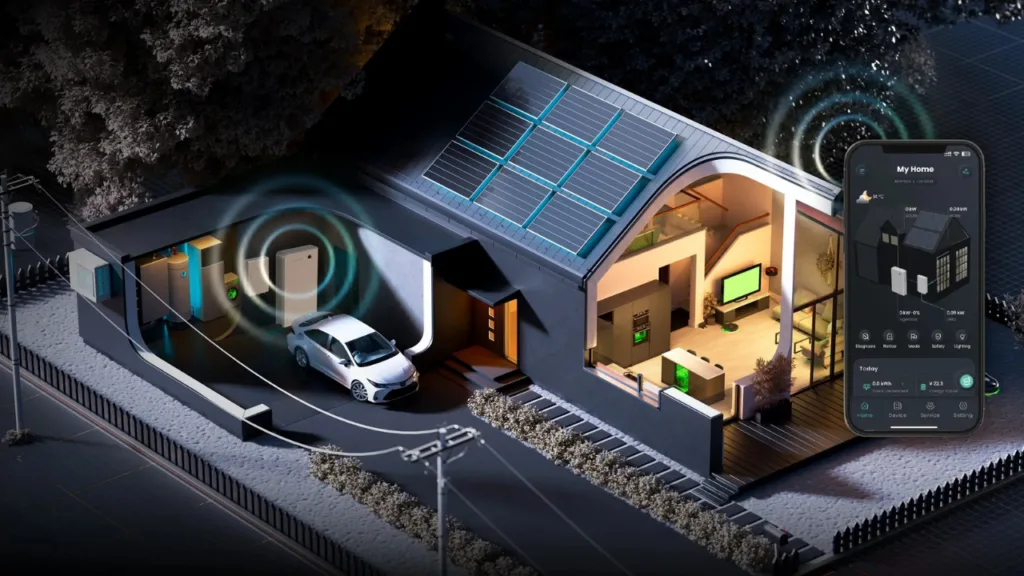
Solar energy is evolving into the foundation of a broader energy ecosystem that integrates generation, storage, EV charging, appliance control, and software-driven decision-making into one cohesive system. Homeowners are shifting from purchasing individual components to investing in comprehensive platforms.
Tesla has been the most prominent advocate of this approach, presenting its solar products, batteries, vehicles, and software as a unified whole. Sigenergy has quickly followed suit, offering integrated all-in-one systems that emphasise simplicity and energy visibility. GoodWe, known for its reliable hardware, is also focusing more on ecosystem cohesion with a new Goodheat range of hot water heat pumps to integrate with its existing energy generation suite.
This shift is significant because complexity hampers adoption. Systems whose components actually talk to each other need less support and last longer, because most of what goes wrong in a multi-brand system goes wrong in the seam between two of them.
1.
Energy independence overtakes bill savings as the primary motivation
This is the defining shift of the decade.
By 2026, the key question driving residential solar decisions will change from “How much will this save me?” to “How little do I need the grid?”
Retail electricity prices are on the rise, feed-in tariffs are declining, and grid constraints are tightening. At the same time, homes are consuming more electricity than ever before. Given this context, maximising exports is becoming less appealing than maximising self-reliance.
System design is already evolving to reflect this shift. Oversized solar arrays (within network limits), higher-efficiency panels, strategically sized batteries, and aggressive self-consumption strategies are becoming standard among informed buyers.
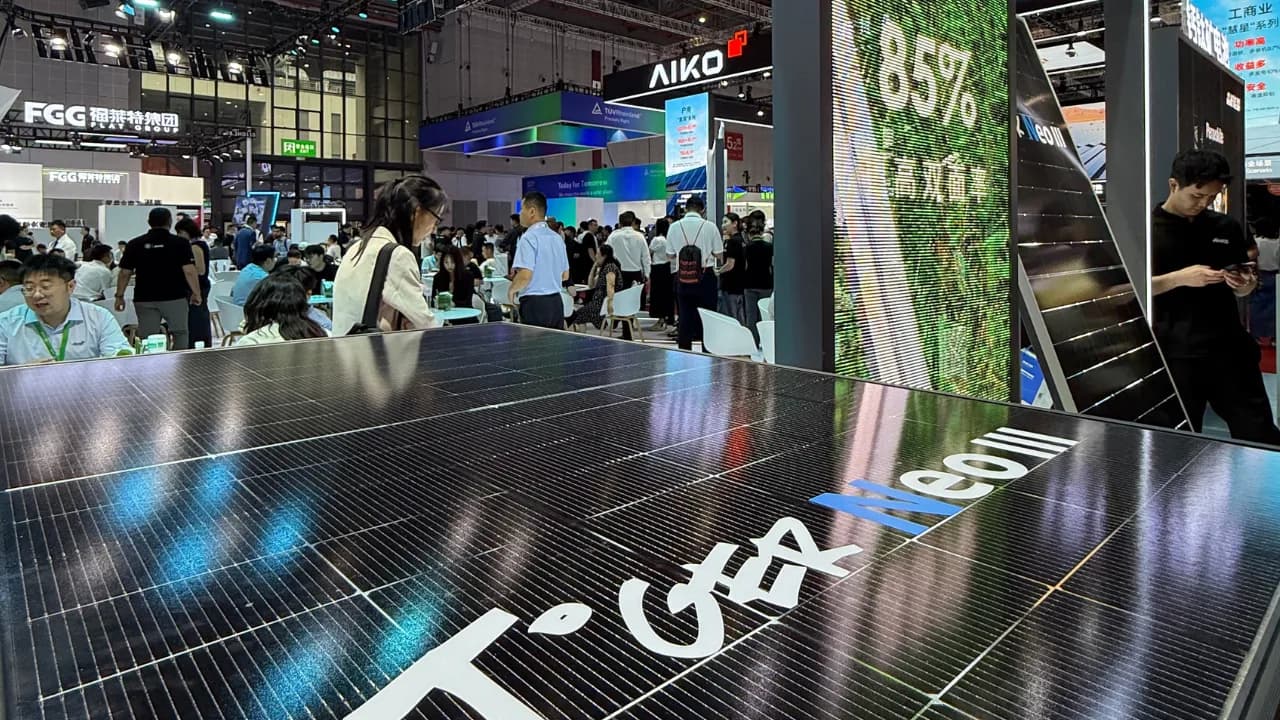
Panel technology is crucial in this transformation—not through radical breakthroughs, but through steady improvements. High-efficiency manufacturers, such as Aiko Energy, with their advanced cell architectures and proven real-world performance, are enabling greater energy generation from limited roof space. Similarly, Tindo Solar’s locally manufactured panels are appealing to homeowners who value Australian-made quality, ethical supply chains, and long-term durability.
By 2026, the most valuable solar systems won’t necessarily be the cheapest or the most powerful on paper. Instead, they will be the systems that quietly and consistently reduce dependence on external energy sources altogether.
The next phase of residential solar in Australia isn’t about chasing novelty. It’s about alignment — with the grid, with household lifestyles, and with a future where energy independence carries real weight.
By 2026, the best-performing homes won’t just generate power.
They’ll manage it intelligently, store it strategically, and rely on it confidently.
And for homeowners making decisions today, understanding that direction may be the most valuable energy investment of all. Contact PSW in Western Australia for Australia’s most advanced [commercially available] sustainable energy technology.