
In this article
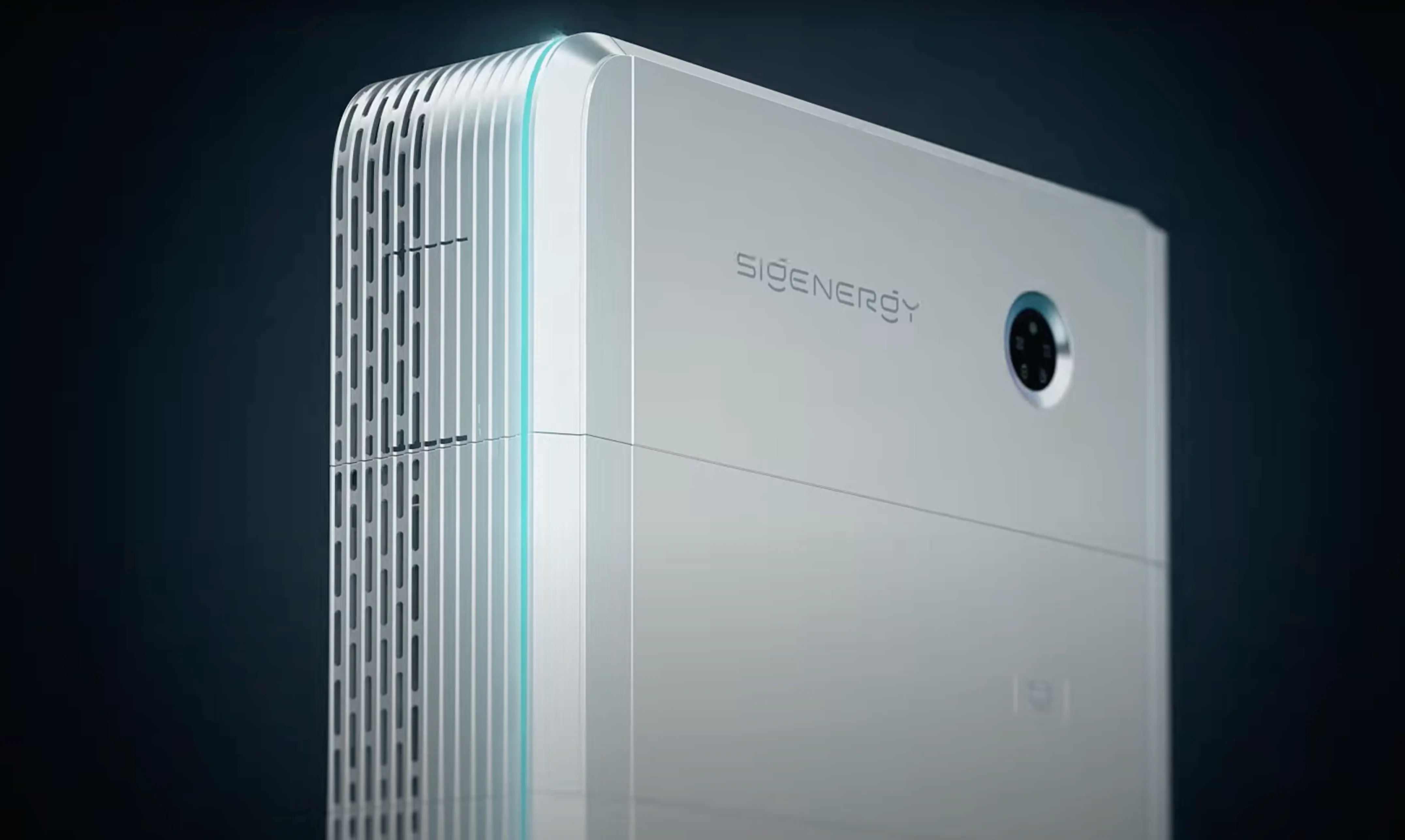
The interesting thing about SigenStor is not that it is an all-in-one. It is that the software was designed first and the hardware built to serve it, which is the opposite order to most of this industry. That has real consequences, and one of them is that it is the wrong product for a house without a reliable internet connection.
In short
- One stack: solar inverter, battery power control, battery modules, optional DC EV charger and the energy management system, in modules of 5 kWh or 8 kWh (5.2 and 7.8 kWh usable).
- The DC-coupled EV charger is the genuinely unusual part. Charging the car from the DC side skips a conversion step that an ordinary AC charger cannot.
- Warranties are not uniform: 10 years on the battery and controller, 2 years on the gateway, sensor and comms module. Read the table before you assume “10-year warranty” covers the whole stack.
- If your internet is unreliable and 4G coverage is poor where you live, buy something simpler. Most of what makes this product good depends on it being connected.
System control and integration
Most home energy systems are an inverter, a battery and a charger from different design teams, made to co-operate through a communications protocol afterwards. It mostly works. When it does not, the failure is almost always in the seam — the battery reporting a state the inverter does not act on, or the EV charger unaware the battery is nearly empty.
SigenStor is built the other way round: one control layer, with the components designed against it. The practical benefit is fewer seams to fail, and it shows up as a system that behaves sensibly in awkward conditions rather than one that needs an installer to tune it. The practical cost is that you are buying into one manufacturer’s ecosystem, and swapping one part out later is not really on the table.
DC-coupled EV charging
A normal EV charger sits on the AC side: solar DC becomes AC through the inverter, then the car’s onboard charger turns it back into DC for the battery. Two conversions, and losses at both. The SigenStor DC charger takes it off the DC bus directly.
Worth being clear about what it is not, because this gets oversold. It is not vehicle-to-home. Bidirectional charging — running the house off the car in an outage — depends as much on the vehicle and on network rules as on the charger, and very few cars sold here support it properly. If someone quotes you a SigenStor EV charger as a way to power the house from the car, ask them to put that in writing.
Manufacturer safety claims
Sigenergy documents five protective layers in the battery module: high-temperature insulation on the inner walls, aerogel pads between cells, a decompression valve, seven temperature sensors, and an internal fire extinguisher in the cell compartment. The extinguisher is genuinely uncommon at this price.
These are the manufacturer’s claims and they are consistent with LFP chemistry being the safer choice it is generally held to be. We have not independently tested any of it and neither has anyone else you are likely to read. Treat a safety feature list as a statement of design intent, which is worth something, rather than as a test result, which it is not.
Warranty cover by component
This is the part most buyers skip and the part we would read first. The battery and the energy controller carry ten years. The gateway, the power sensor and the communications module carry two.
| Covered Product | Warranty Period |
|---|---|
|
Sigen Battery |
10 years |
|
Sigen Energy Controller |
10 years |
|
Sigen Energy Gateway |
2 years |
|
Sigen Power Sensor |
2 years |
|
Sigen Communication Module |
2 years |
That is not unusual and it is not hidden — it is in Sigenergy’s own warranty document. But “ten-year warranty” in a sales conversation refers to the two expensive items, and a system whose comms module fails in year four is a system with a bill in year four. On a stack this integrated, the small parts are the ones to ask about.
PSW Energy carries a 10-year workmanship guarantee on SigenStor retrofit installations, and 15 years where it goes in alongside a solar array. That is our labour, separate from Sigenergy’s cover on the equipment.
Changes since the original review
This review was written in January 2025 when SigenStor was new here. Since then the range has moved on — there is a SigenStor Neo and the EV DC charging module has had changes worth knowing about if you are specifying one now. PSW Energy has since become a Sigenergy Gold Installer.
Sigenergy was founded in 2022, which is short. Its founder Tony Xu spent more than two decades at Huawei, latterly running FusionSolar and the Ascend AI business, and the architectural fingerprints of that are all over this product. A young company is a real risk on a ten-year warranty and we would rather name it than pretend it away.
Current models are in the battery range. For a stack sized against your own evening rather than the maximum configuration, ask for a written price.