
In this article
In August, 27,078 electric cars were delivered in Australia. That is 24.9 per cent of every new vehicle sold that month, and it beat petrol-only cars (25,824) and diesel-only cars (23,608) for the first time. Add hybrids and plug-in hybrids and something with a plug or a battery in it took 51.8 per cent of the market.
If you already have solar, charging an EV during the day gives you another use for surplus generation.
The number that matters is 2 cents against 33
Two numbers carry this whole thing. Power you export from a Perth rooftop before 3pm earns you 2 cents a kilowatt hour under Synergy's DEBS schedule. Power you buy back from the grid on Home Plan A1 costs 33.26 cents.
So every kilowatt hour you put into a car in the middle of the day instead of sending to the grid is worth about 31 cents to you.
Work it through on a normal car. Say 15kWh per 100km and 12,000km a year. That is roughly 1,800kWh of driving. Off the grid at 33.26 cents, about $600 a year. Off your own daytime solar, the real cost is the export you gave up, about $36.
Call it $560 a year, on a system you already own.
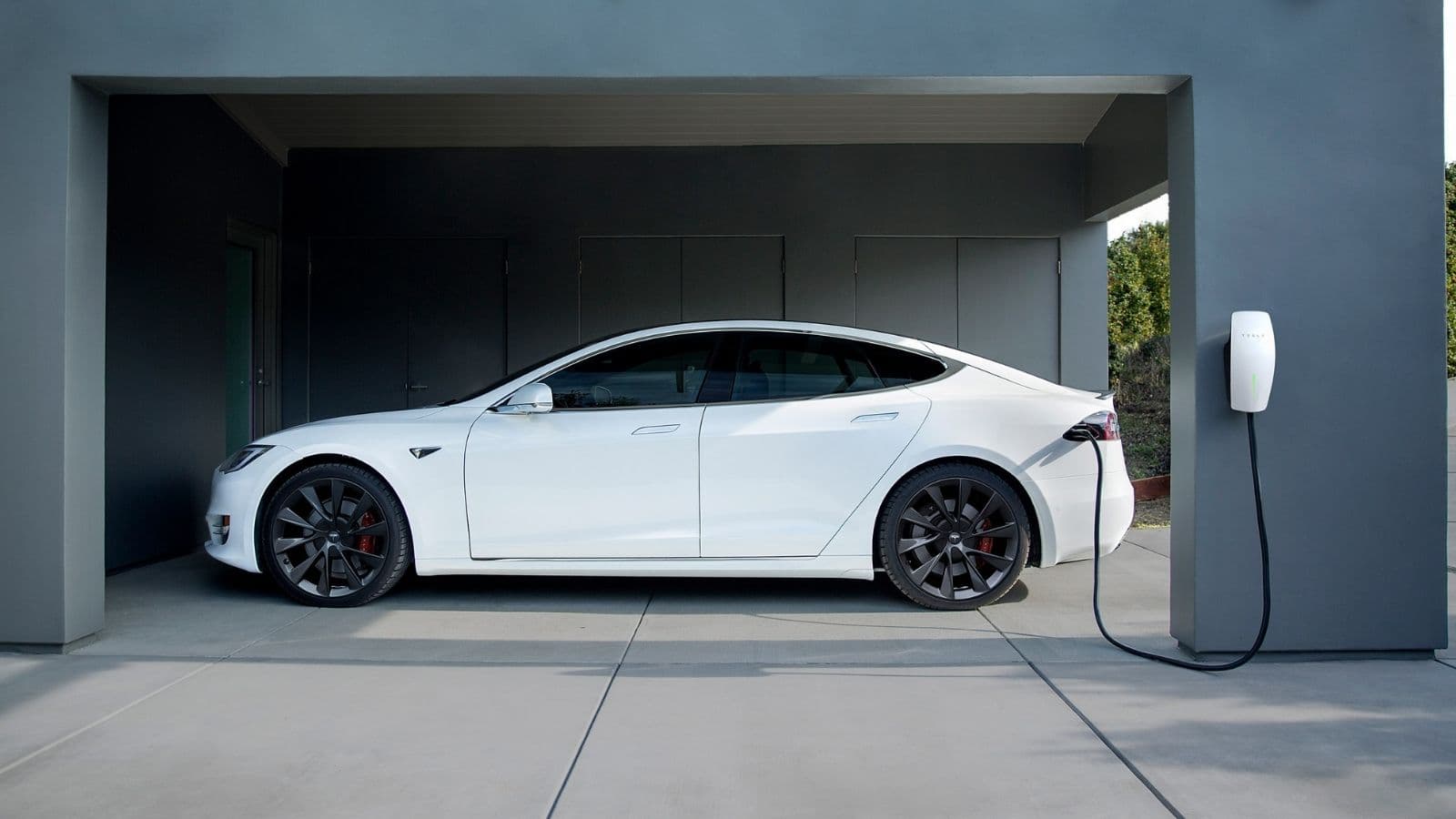
Charging before 3pm
DEBS pays 10 cents a kilowatt hour for exports between 3pm and 9pm, and 2 cents outside that window. So the cheapest time to charge is the same time your panels are producing most and your export is worth least: late morning through early afternoon.
Plug in at 6pm and you are doing the opposite. You are either pulling from the grid at 33 cents or eating into the export that was about to pay you 10.
Most EVs and most chargers can schedule this. Set it once and forget it.
EV charging and battery size
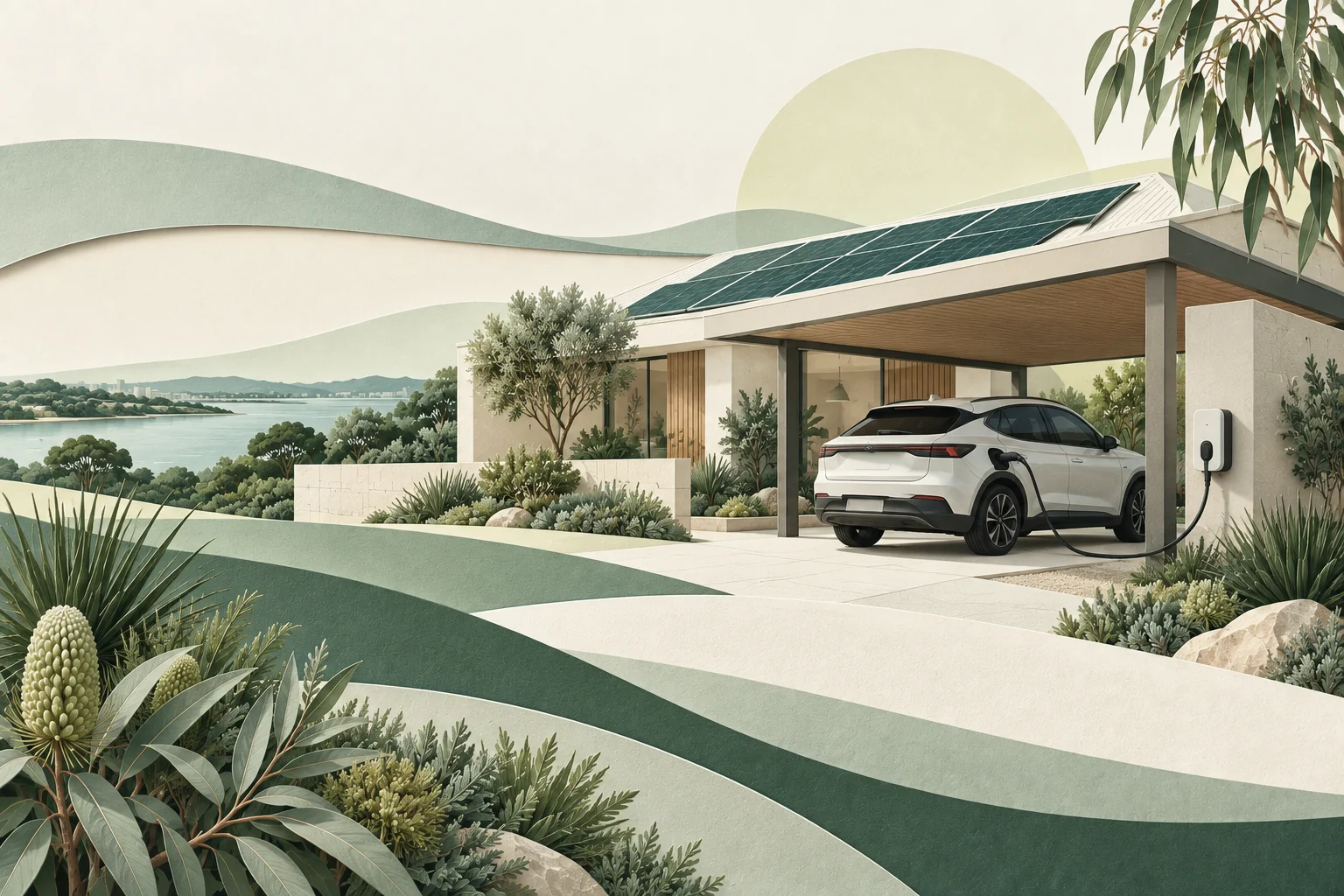
Let the roof
do the driving.
Charge from available surplus while the sun is out. The car may not need that energy to pass through a home battery first.
Start with when the car is home, how much energy it needs and the surplus your solar actually produces. Battery sizing depends on the home’s other needs too.
PSW Energy · Conceptual illustration, not an installation design.
Charger speed and solar diversion
Three-phase and 22kW sounds better on paper. For a car that sits at home overnight, a single-phase 7kW unit adds roughly 40km of range an hour, which fills almost any daily commute in a few hours of sunshine.
Where the bigger unit earns its price is a three-phase house with two EVs, or a car that comes home near flat and goes out again the same evening. Tradies and big-kilometre drivers, mostly.
The feature worth paying for is not speed. It is solar diversion, the setting that lets the charger follow your surplus and stop drawing when a cloud goes over. That is the thing that keeps you out of the 33 cent tariff.
Plan EV charging in your quote
This costs nothing to mention and it changes what we design.
A few details.
A better starting point.
| Bring | Why it helps |
|---|---|
| Car make and model | Establishes the charging capability. |
| When the car is home | Shows whether daytime charging fits. |
| Existing solar details | Helps assess available generation. |
| Switchboard and parking location | Starts the installation and cable-route discussion. |
Plan for the charger early so switchboard capacity and cable routes can be assessed together.
Our installers are SAA-accredited for grid-connected photovoltaic (GCPV) and grid-connected battery storage (GCBS), and the group's ISO 45001 safety certification, held by PSW Energy, names EV charging installation inside its scope. One job, one set of paperwork, rather than three trades and a finger-pointing exercise.
If you already have panels up and the car is arriving, get a quote and tell us the model. The charger choice depends on what the car can take, and the switchboard answer depends on what is already on it.